Art Scout

2026

Speculative Work
Role: UX/UI Designer

Length: 1.5 Months

Team: Solo Project

Introduction

For this project, I was asked to design the MVP for an end to end application that fit into the overarching theme of a “Lifestyle Application”. I am a big fan of museums and art, and I also love to travel. But I often feel decision fatigue when trying to choose not only what museum to go to, but also what to see once I visit the museum I’ve chosen. Because tickets are expensive, there’s a high degree of pressure to choose the right museum, and to make the most of the experience while you are there.

Based on my personal experience, I decided to do some research into what problems people encounter while trying to visit museums– and found that many people find museums to be overwhelming, intimidating, and difficult to navigate. To decide what solution would best address this issue, I researched the problem space and then conducted my own user interviews and competitive analysis. Afterwards, within a two month timeline, I created, tested, and iterated on my ideas– before finalizing the concept of Art Scout.

Introduction

For this project, I was asked to design the MVP for an end to end application that fit into the overarching theme of a “Lifestyle Application”. I am a big fan of museums and art, and I also love to travel. But I often feel decision fatigue when trying to choose not only what museum to go to, but also what to see once I visit the museum I’ve chosen. Because tickets are expensive, there’s a high degree of pressure to choose the right museum, and to make the most of the experience while you are there.

Based on my personal experience, I decided to do some research into what problems people encounter while trying to visit museums– and found that many people find museums to be overwhelming, intimidating, and difficult to navigate. To decide what solution would best address this issue, I researched the problem space and then conducted my own user interviews and competitive analysis. Afterwards, within a two month timeline, I created, tested, and iterated on my ideas– before finalizing the concept of Art Scout.

Problem Space


What is the problem that needs to be solved?

Museums are frequently visited and shared cultural spaces for tourists and locals alike. According to the American Alliance of Museums, “Seventy-six percent of all U.S. leisure travelers participate in cultural or heritage activities such as visiting museums”, and “Museums contribute $50 billion to the U.S. economy each year”.

But despite these impressive statistics, museums are still seen as intimidating. While most museums make conscious efforts to be integrated parts of the community with little barrier to entry (social outreach, educational programs, free entry days), there are still a plethora of articles and forums on the internet discussing the feeling of unease many people associate with museums– stemming from their long history of being associated with only the most wealthy upper echelons of society, or the highest levels of academia.

In tandem, many people see museums as overwhelming. Not only do major cities normally have many museums to choose from, which can make picking where to spend your time as a tourist particularly stressful– but most museums also have huge and diverse collections. This is such a pervasive issue that it was titled “Museum Fatigue” by Benjamin Ives Gilman, and there are several articles on the internet that discuss it, from: “Museum Fatigue Is Real, Here’s How to Beat It” to “Museum Fatigue: A Century-Old Problem”.

In the Condé Nast Traveler, they say: “A 2019 study published in Visitor Studies found that museum-goers’ engagement and comprehension decline sharply after about 30 minutes in an exhibition space”. The average museum has far more than 30 minutes of things to do and experience, meaning that as time goes on, there are diminishing returns on enjoyment.

Problem Space


What is the problem that needs to be solved?

Museums are frequently visited and shared cultural spaces for tourists and locals alike. According to the American Alliance of Museums, “Seventy-six percent of all U.S. leisure travelers participate in cultural or heritage activities such as visiting museums”, and “Museums contribute $50 billion to the U.S. economy each year”.

But despite these impressive statistics, museums are still seen as intimidating. While most museums make conscious efforts to be integrated parts of the community with little barrier to entry (social outreach, educational programs, free entry days), there are still a plethora of articles and forums on the internet discussing the feeling of unease many people associate with museums– stemming from their long history of being associated with only the most wealthy upper echelons of society, or the highest levels of academia.

In tandem, many people see museums as overwhelming. Not only do major cities normally have many museums to choose from, which can make picking where to spend your time as a tourist particularly stressful– but most museums also have huge and diverse collections. This is such a pervasive issue that it was titled “Museum Fatigue” by Benjamin Ives Gilman, and there are several articles on the internet that discuss it, from: “Museum Fatigue Is Real, Here’s How to Beat It” to “Museum Fatigue: A Century-Old Problem”.

In the Condé Nast Traveler, they say: “A 2019 study published in Visitor Studies found that museum-goers’ engagement and comprehension decline sharply after about 30 minutes in an exhibition space”. The average museum has far more than 30 minutes of things to do and experience, meaning that as time goes on, there are diminishing returns on enjoyment.

Research


In order to determine the best possible solution, I employed the following methodologies:


Competitive Analysis

I researched three apps marketed to address similar problem spaces: 1) Smartify, 2) Google Arts and Culture, and 3) Metropolitan Museum of Art. I compared their mission statements, their target markets, their strengths, and their weaknesses.


User Interviews

I then interviewed five different users about their experience with visiting museums.

These were the key findings from most of the interviewees:

POV Statements and Personas

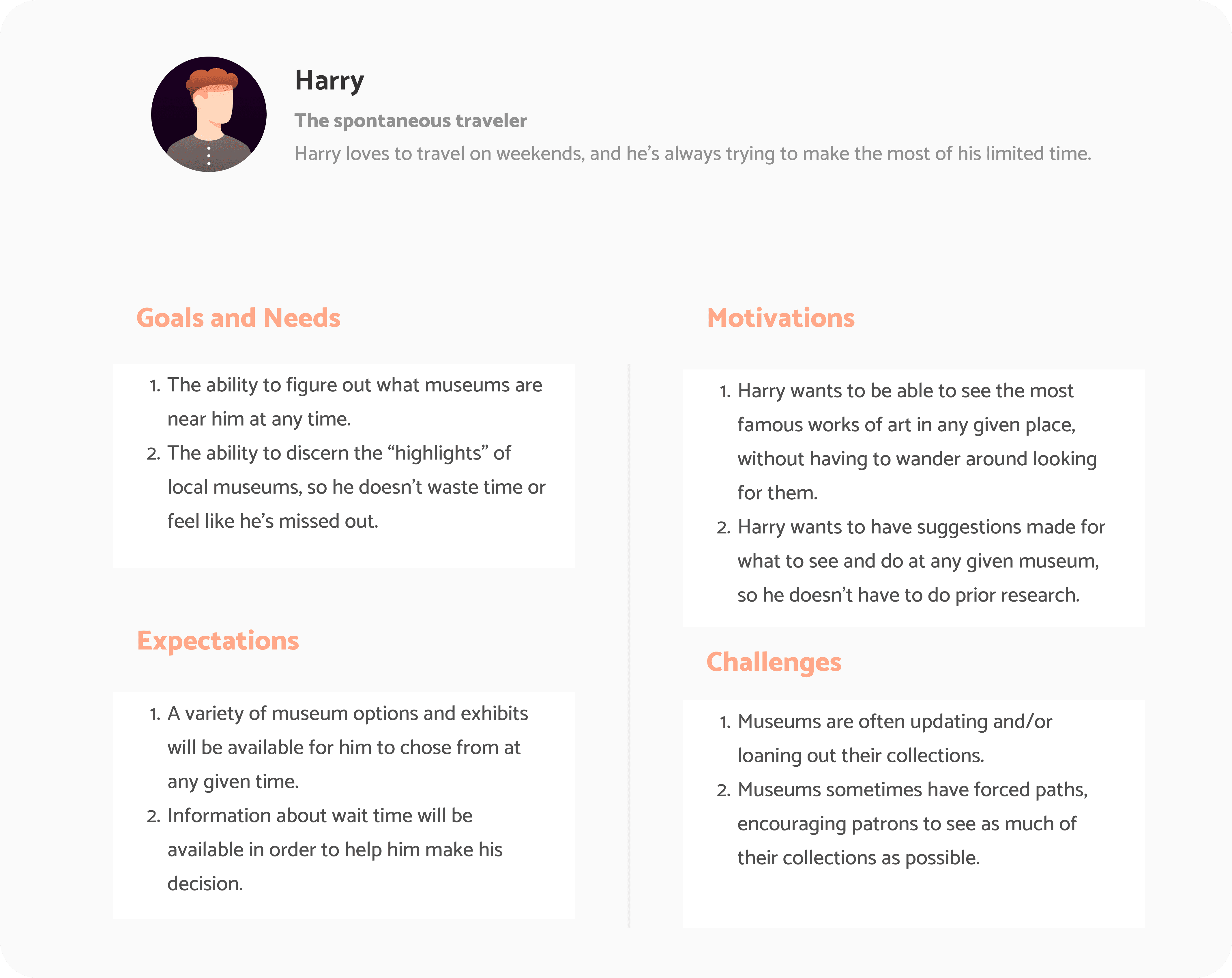
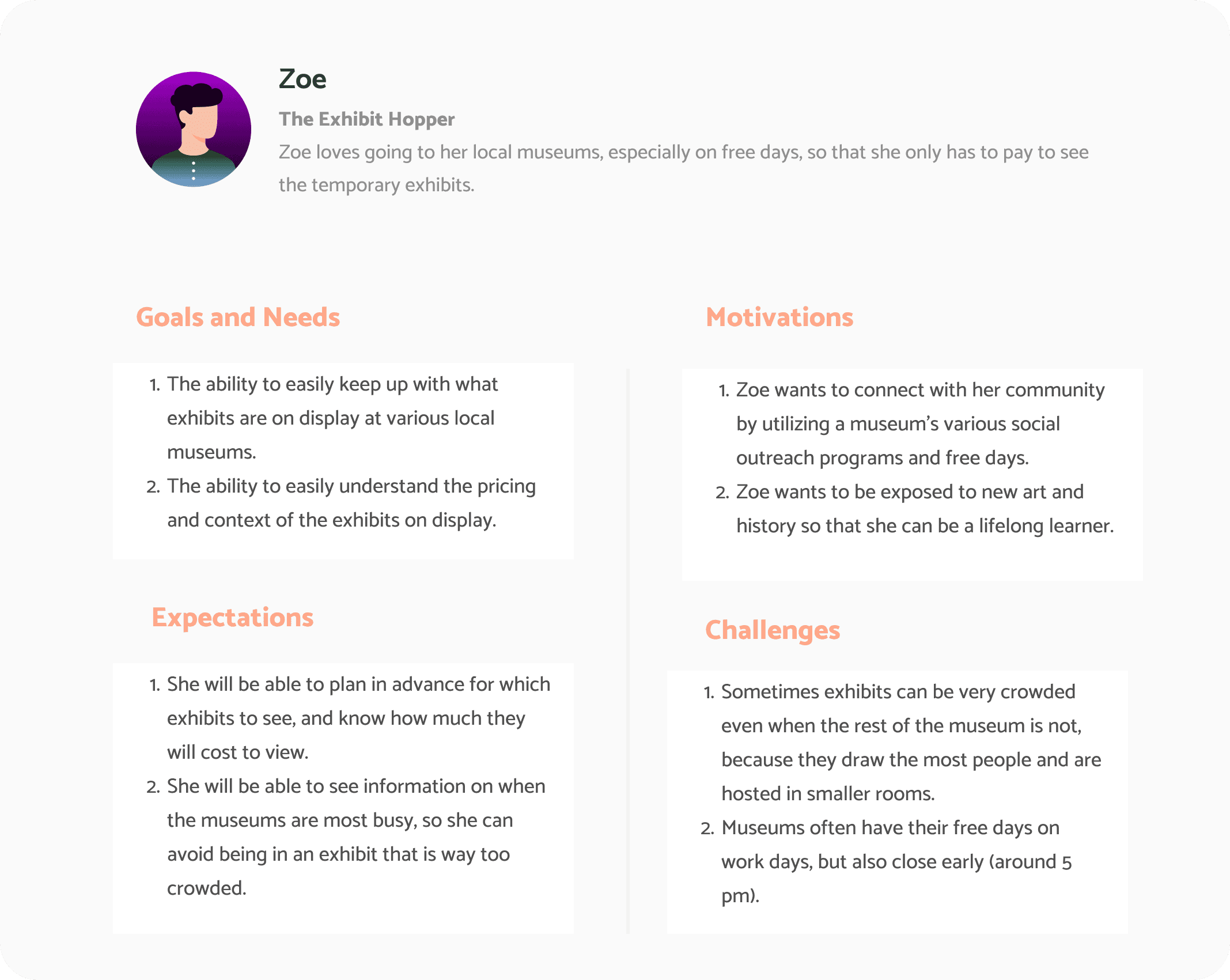
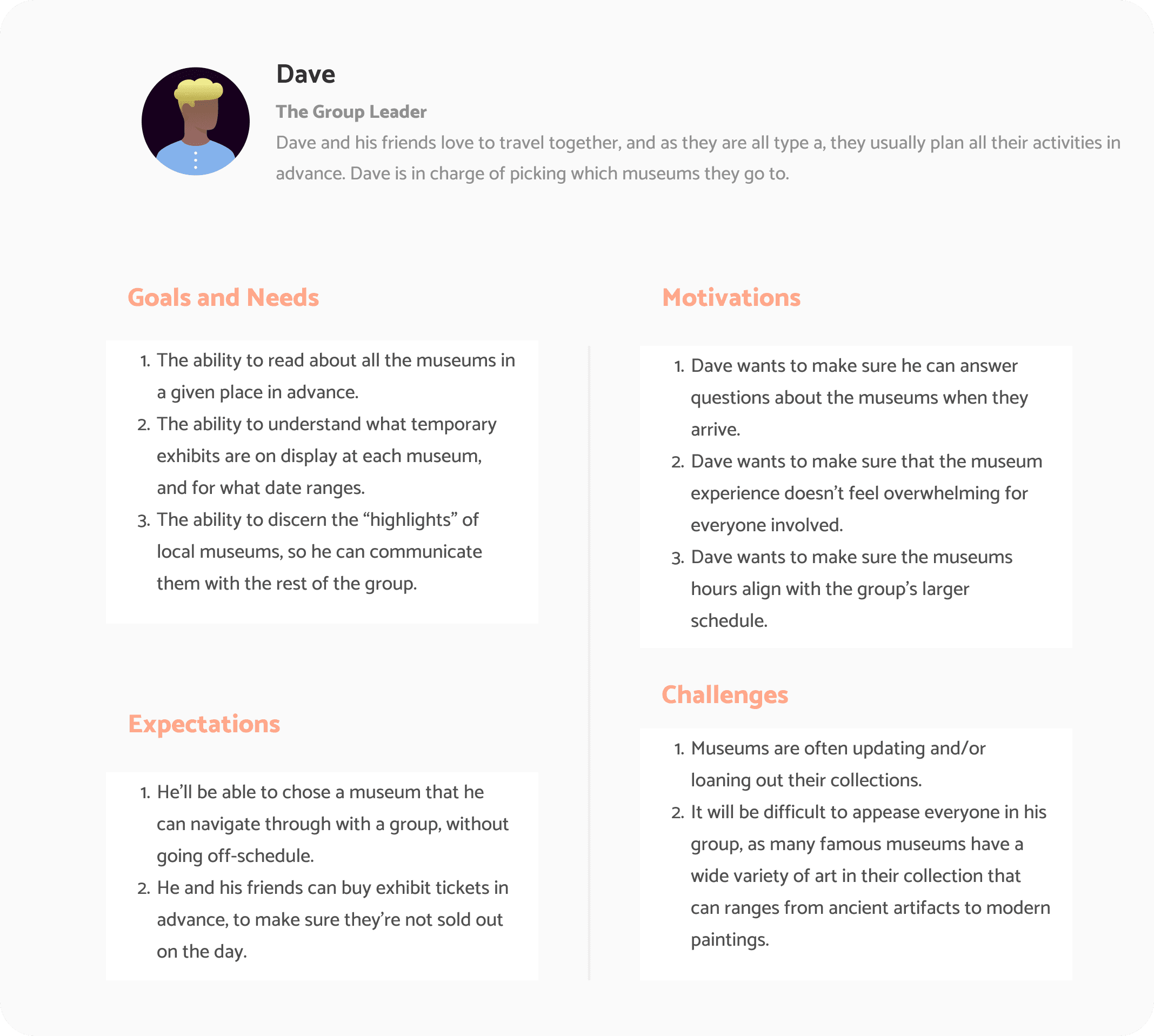
With the information I had from my secondary research, competitive analysis, and user interviews— I began to understand the direction my solution should take in order to be the most effective. Feel free to reference both of these assets below.

POV Statement #1

Insight

Users find it difficult to choose which museums to go to while they are traveling.


POV Statement

People who want to go to museums while traveling need to be able to decide which museum is the best fit for them, otherwise they will be overwhelmed by the amount of choices.


POV Statement #2

Insight

Users find it difficult to prioritize what to see within a given museum.

POV Statement

People visiting museums need to be able to decide which exhibits and parts of the collection they’re most interested in, otherwise they will feel overwhelmed and fatigued.


POV Statement #3

Insight

Users find crowded museums to be unenjoyable.

POV Statement

People who want to avoid crowded museums need to be able to understand when particular museums are most crowded, otherwise they won’t be able to enjoy their experience.


POV Statement #4

Insight

Users find long wait times at museums to be a deterrent, especially while traveling.

POV Statement

People who want to avoid long wait times need to be able to understand the average wait time for a museum in advance, otherwise they will feel like they are wasting their limited time.
Ideation


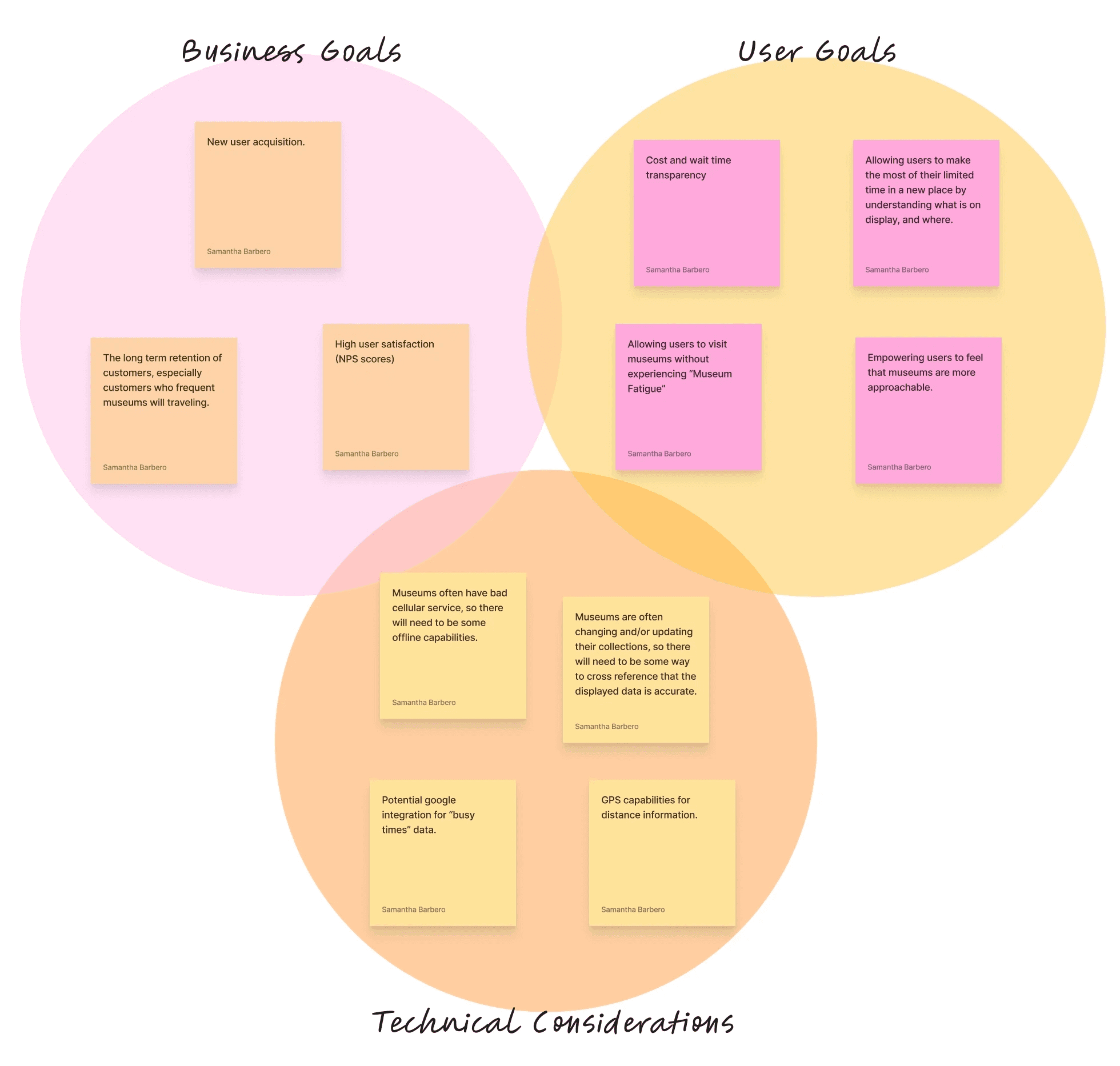
Now that I had identified the problem space, and the potential users, it was time to set some goals and figure out what the solution would look like.


Initial Pitch

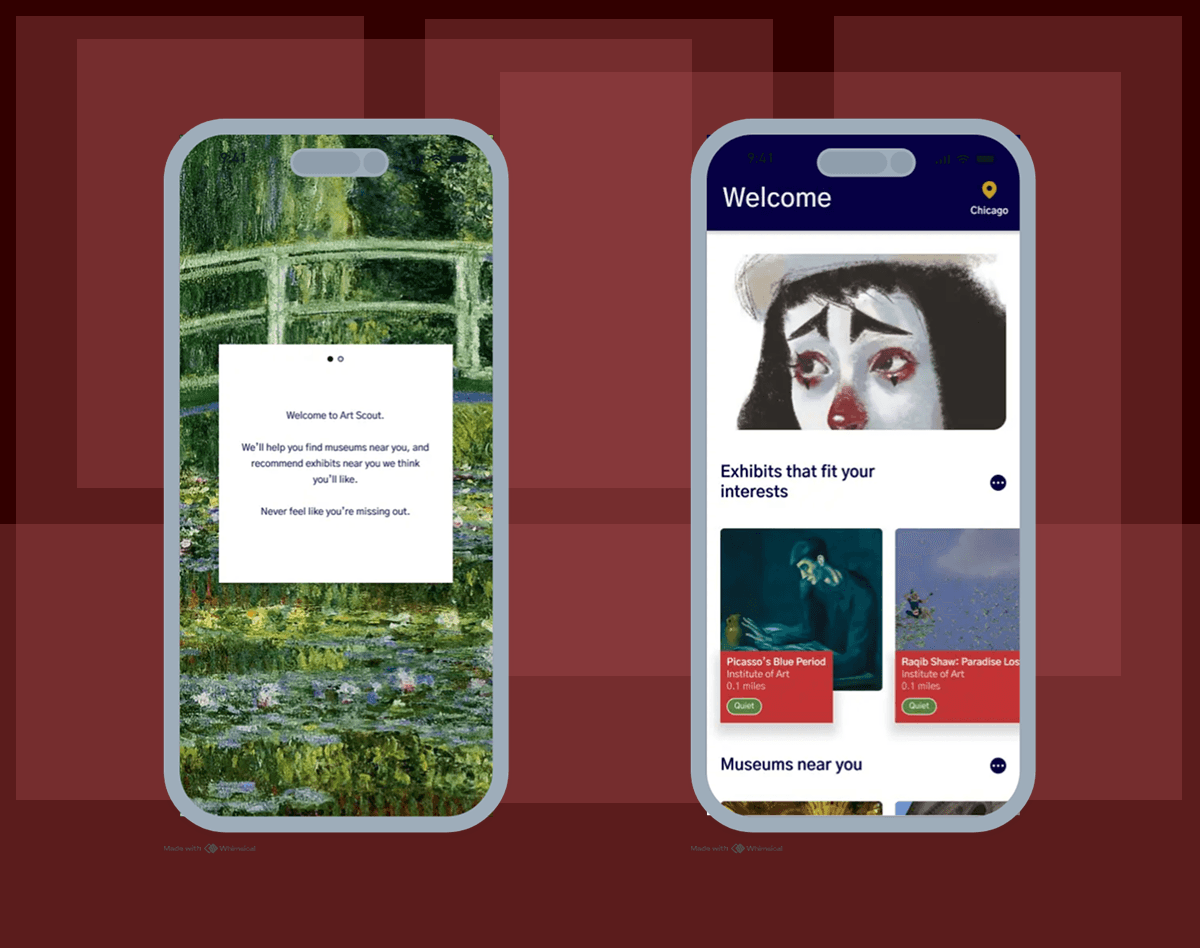
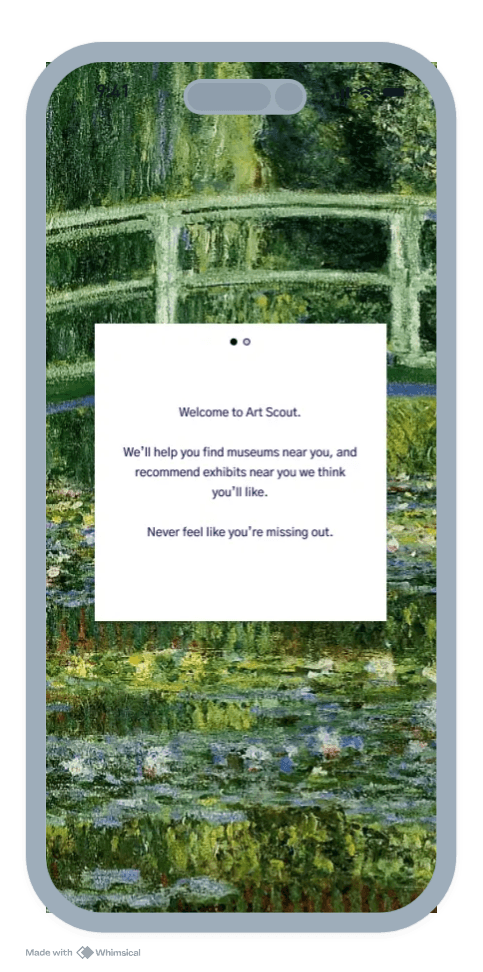
An app that recommends museums to the user based on their physical proximity and their interests. This way the user can pick a museum– and the specific exhibits they want to see in the museum– without feeling completely overwhelmed by choices. This will help make visiting museums more approachable, and also allow people to focus on the exhibits that align with their interests, before museum fatigue sets in. 


Project Goals
Style Guide

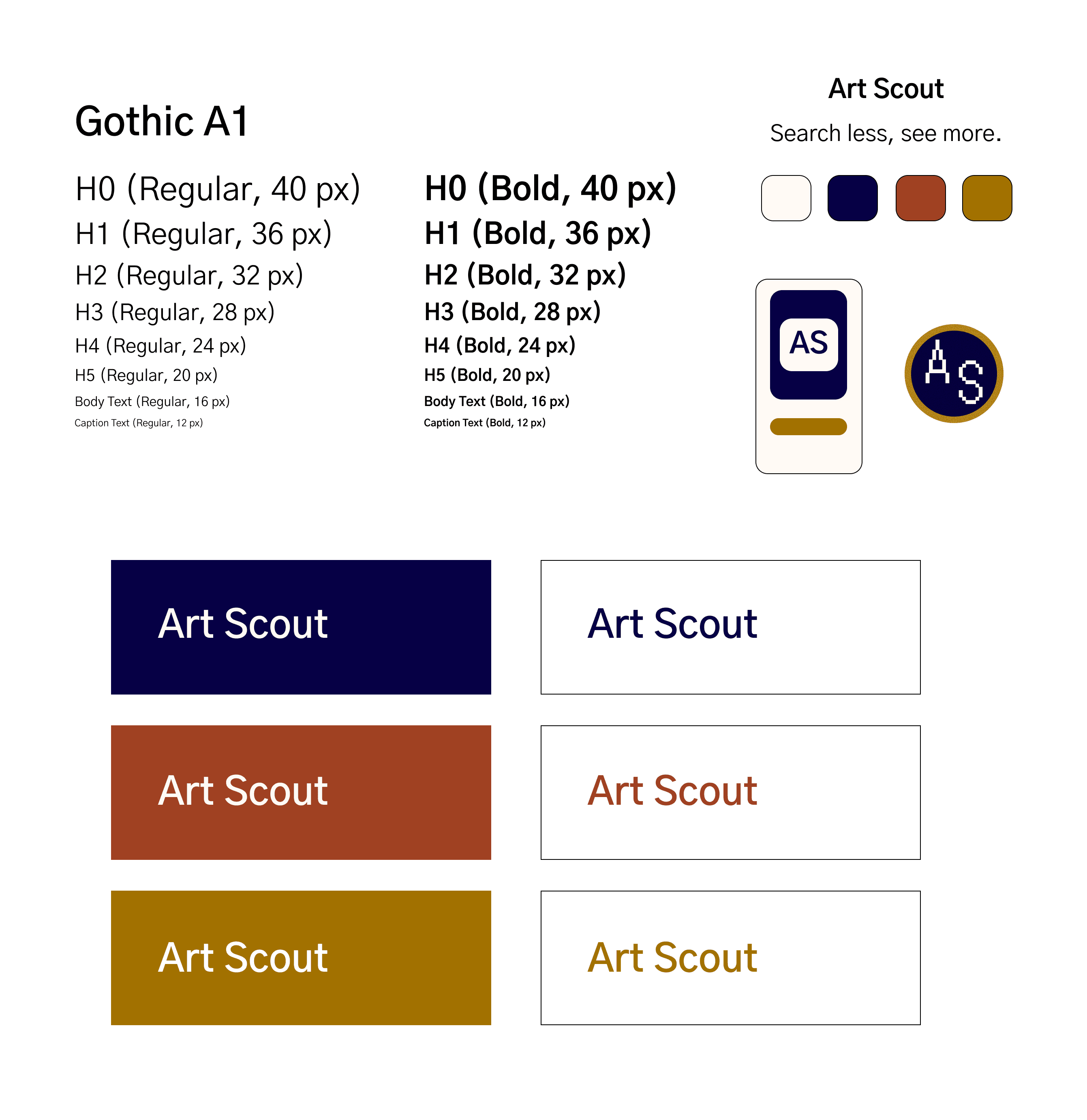
For this style guide, I started with the idea of referencing some of the most famous pigments used in paints (Prussian blue, red ochre, and yellow ochre). For the logo, I wanted to emulate a scouting patch.

Wireframing and Prototyping


Now it was time to figure out how users would interact with the app.


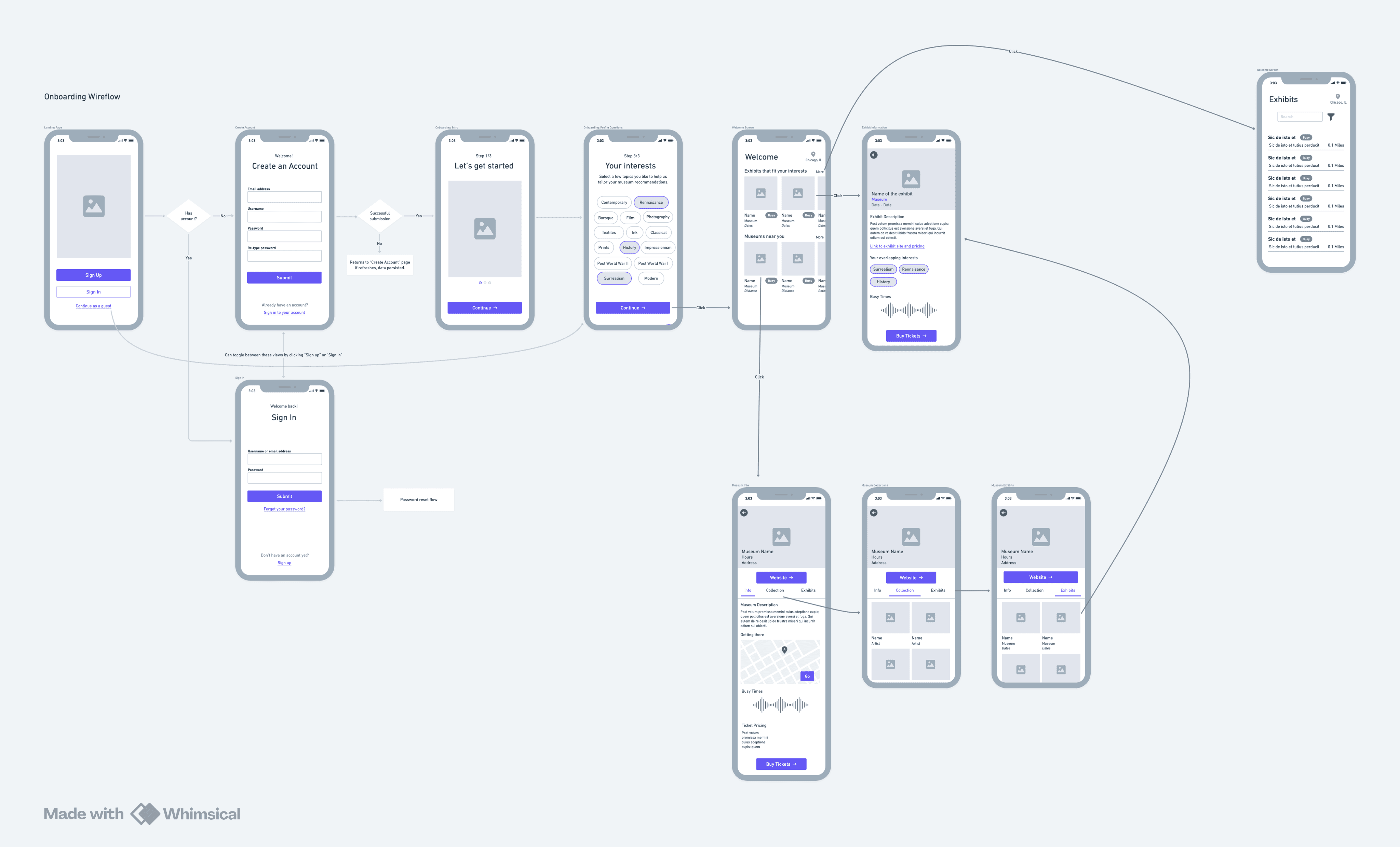

User Flows

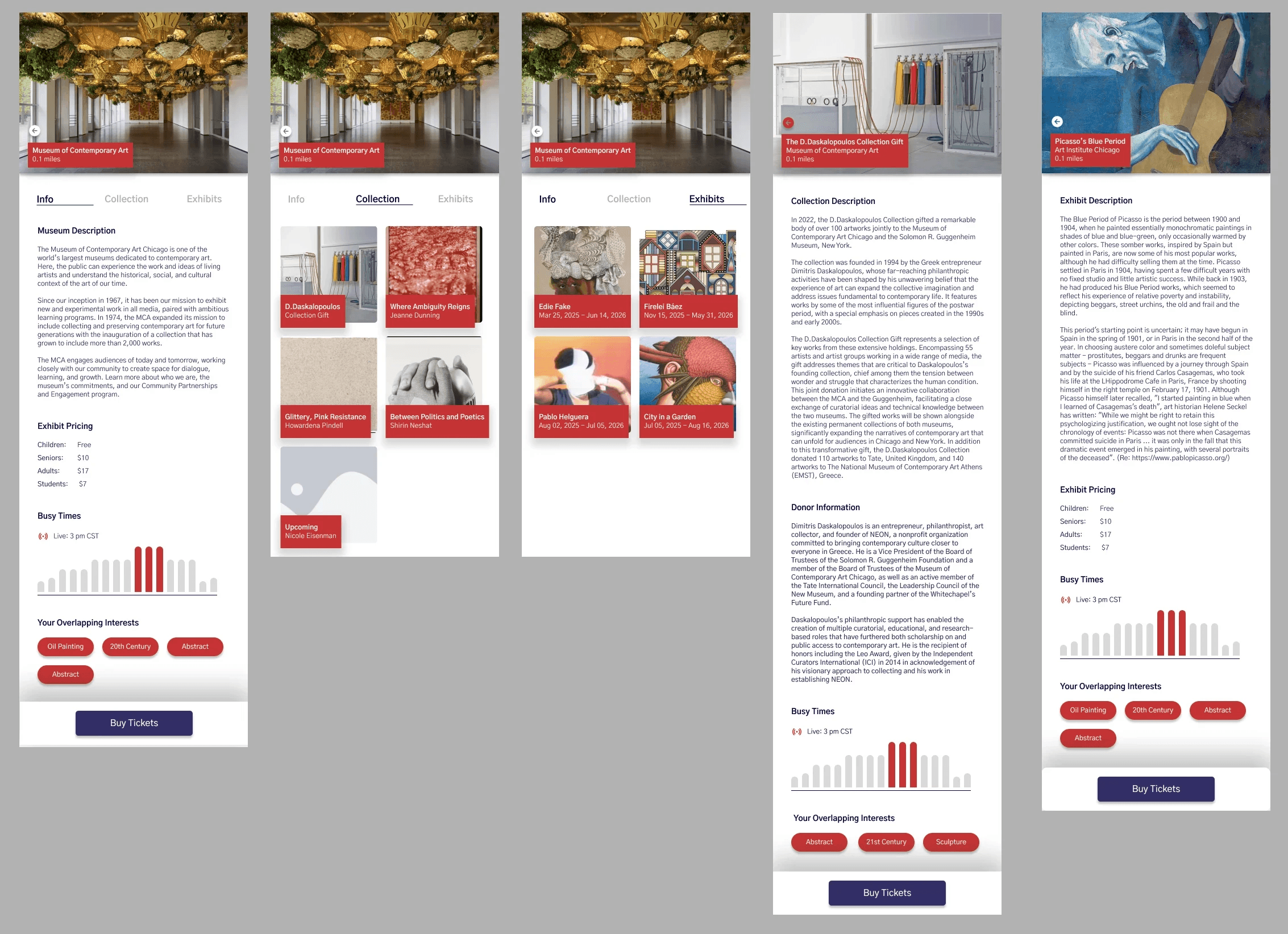
I created user flows for the most important activities users would complete within the app: 1) finding out more information about a museum, and 2) finding out more information about an exhibit.
Low-Fidelity Wireframes

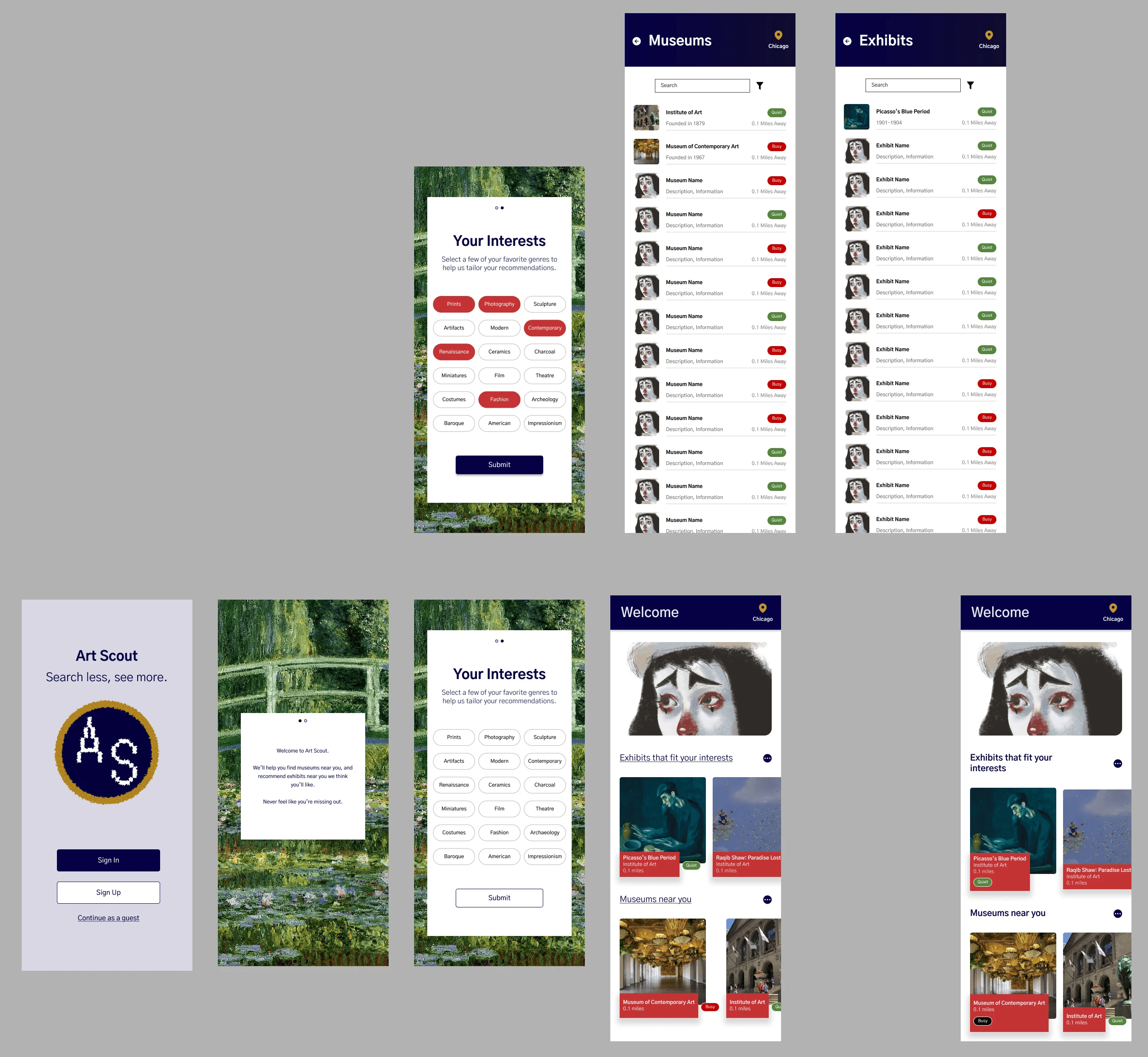
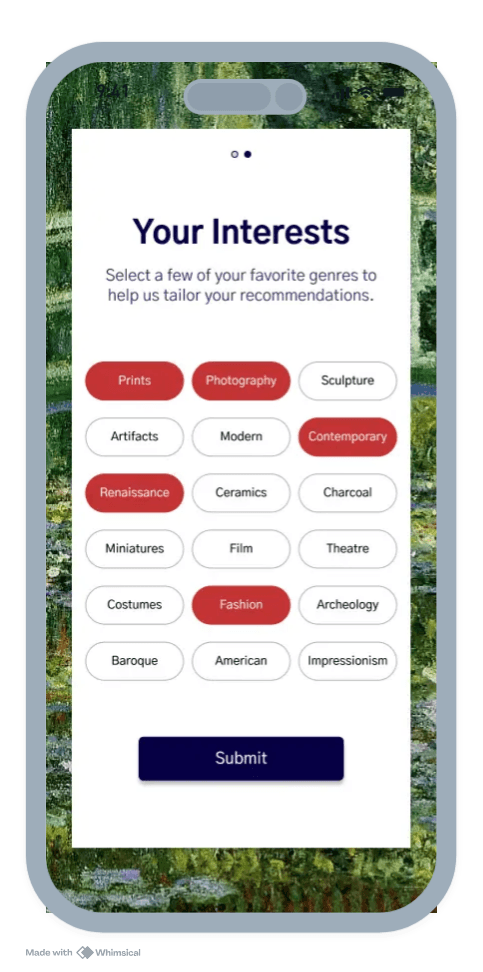
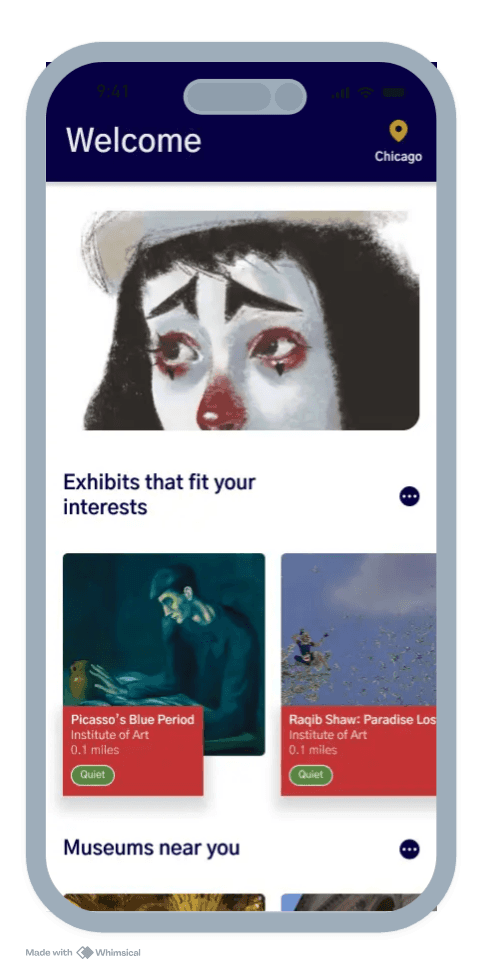
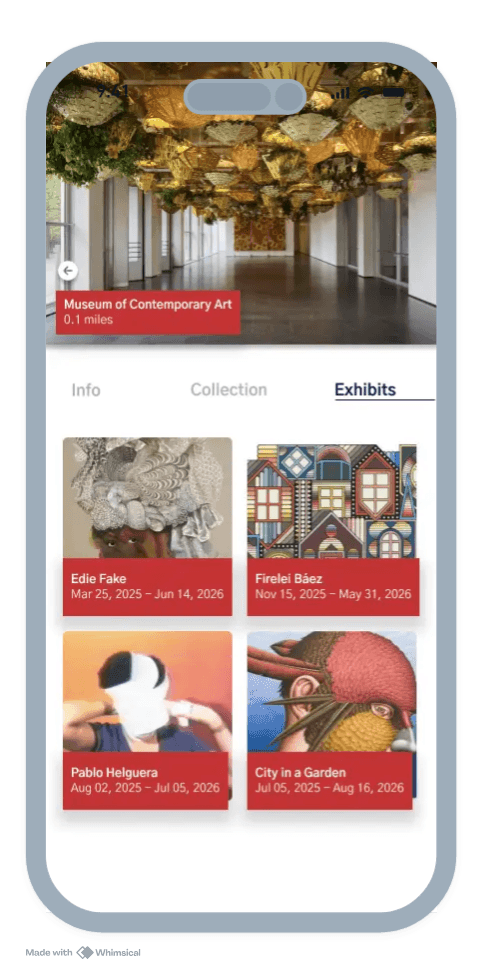
High-Fidelity Wireframes

With these screens completed, I could finally create a prototype to show to my originally interviewed users.

User Testing


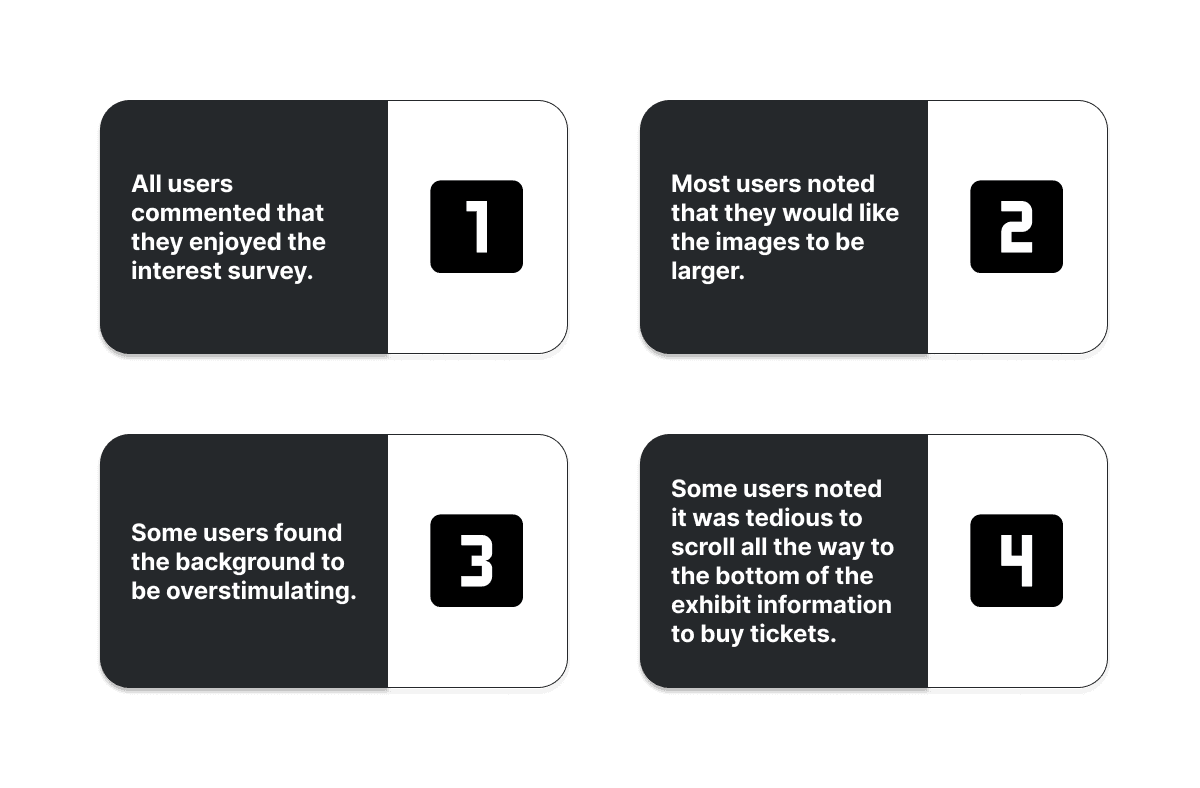
Now it was time to ensure that the product was working as intended. Did it actually solve the problem I wanted it to?

What did users think? What would I have to change to make this the ideal solution to our problem? Here were the key findings:

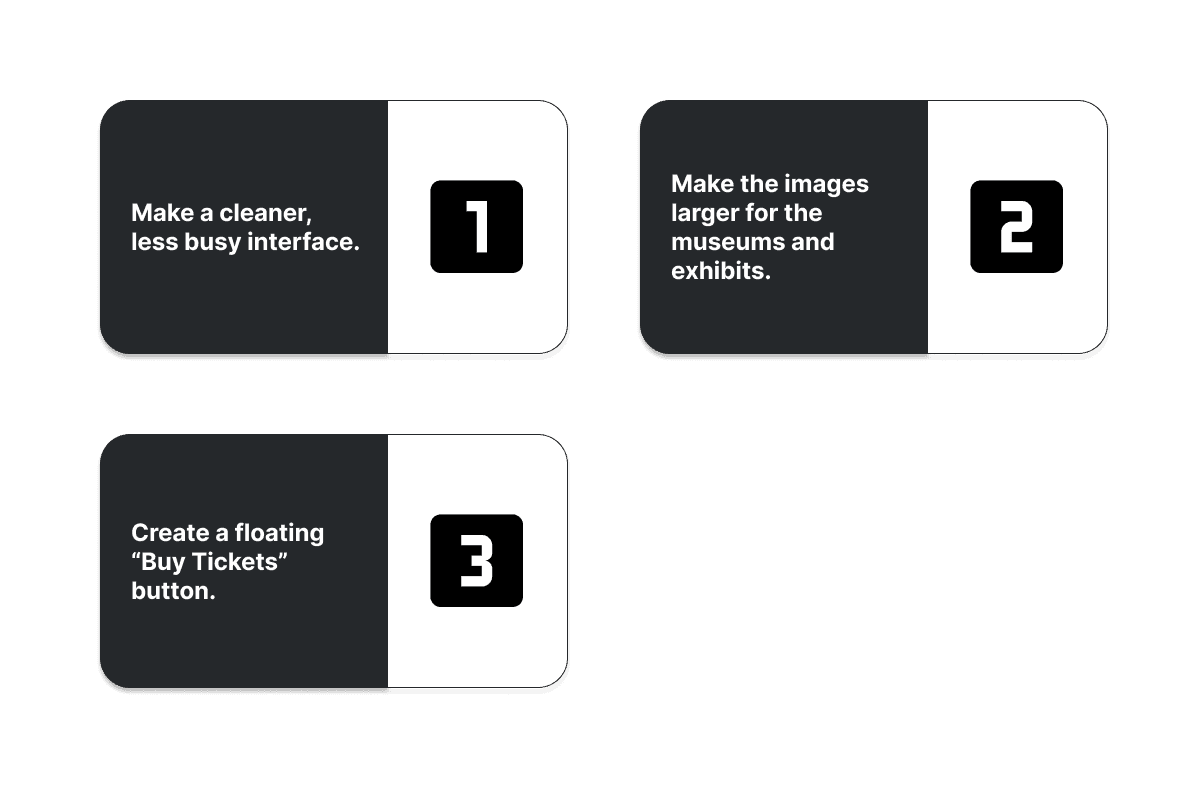
Opportunities and Prioritization:
Versioning


Now all there was left to do was make the final alterations!

Final Designs

Conclusion


I hope that this app can serve as an entry point for making museums feel more approachable to anyone who is interested in visiting them.

While for the MVP of this product I wanted to keep the scope focused on museums, I could see future iterations of this product including information about other cultural and heritage sites people tend to visit while being tourists– such as landmarks, restaurants, and more.
©2026 Samantha Barbero

©2026 Samantha Barbero